The Cold Truth About Hiring Offshore Developers for Your US Startup
Most US startup founders underestimate the complexity of hiring offshore developers. They focus on cost savings, only to find themselves drowning in communication overhead, cultural misunderstandings, and compromised code quality. This isn't about finding cheaper talent; it's about finding the *right* talent strategically. The truth is, a poorly managed offshore team can cost you more in the long run than a local one.
Why Most US Startups Get Offshore Hiring Wrong
The common pitfall? Treating offshore hiring like a simple procurement task. You wouldn't hire your core UK-based engineering lead based solely on a low hourly rate, yet that's precisely what many do when looking overseas. They skip due diligence on technical proficiency, communication protocols, and long-term team cohesion. This approach almost guarantees a struggle.
The reality is that 80% of startups making their first offshore hire overlook the critical need for clear, documented processes. Without them, even the most talented offshore developers can produce output that misses the mark, leading to costly rework and missed product launch dates.
The Hidden Costs Beyond the Hourly Rate
Beyond direct salary, consider the true cost: time spent onboarding, managing, and correcting work. Add to that potential IP risks, differing legal frameworks, and the sheer overhead of bridging geographical and cultural divides. These 'hidden' costs often inflate the actual expense beyond initial projections.
For instance, a fast-growing Series B fintech in New York I spoke with recently realised they'd spent over 15 hours a week on micro-management and clarification for a team of four offshore developers, diverting them from strategic product development.
The Right Way to Source Offshore Talent
Success hinges on shifting your perspective. Instead of 'hiring cheaper developers,' think 'building a strategic, scalable engineering function.' This means evaluating potential partners not just on their tech stack, but on their understanding of your business goals, their project management rigour, and their commitment to quality.
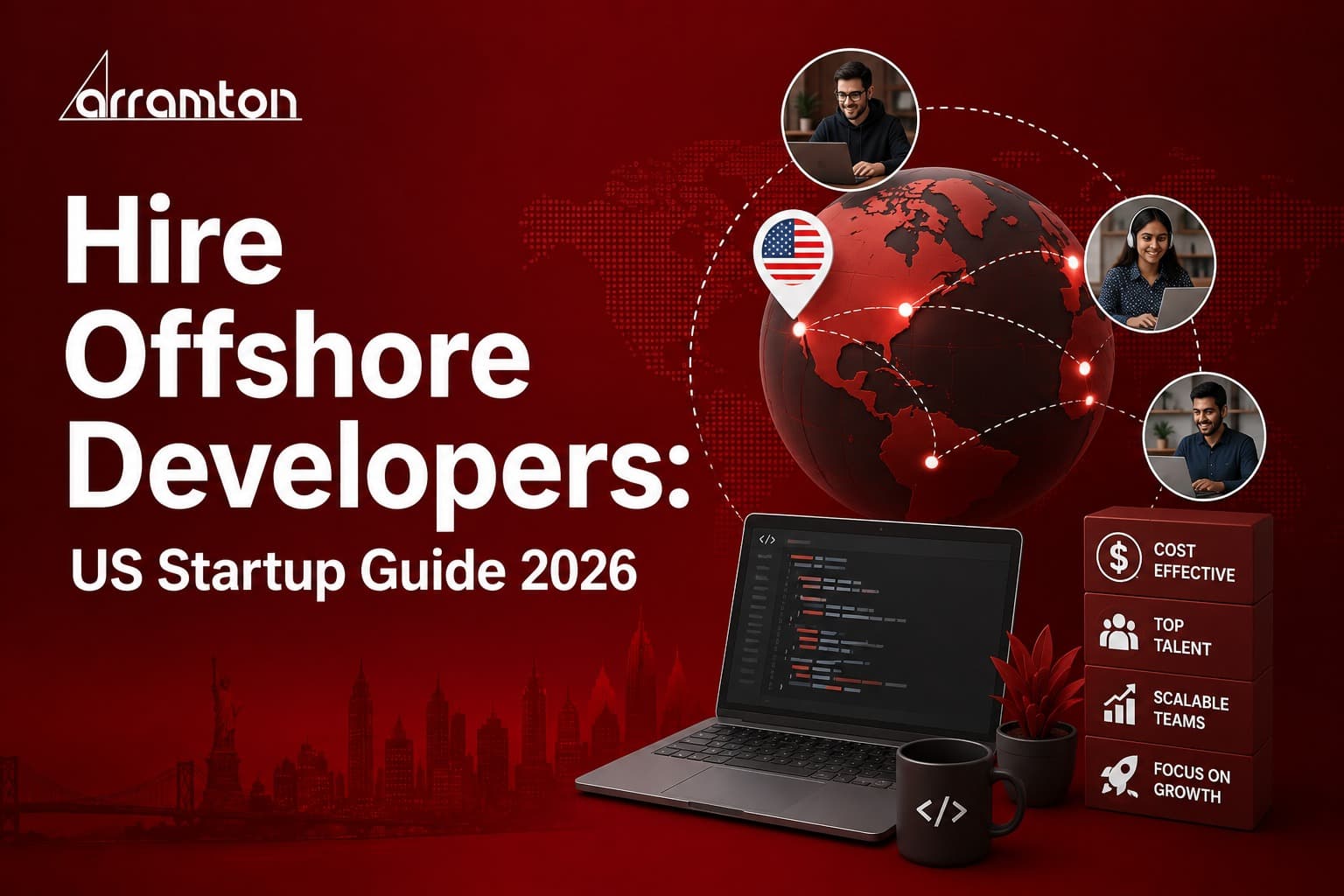
This article is for US startup founders and CTOs who want to hire offshore developers effectively in 2026, avoiding the common mistakes that lead to project delays and budget overruns. We'll cover how to vet candidates, structure your engagement, and build a high-performing remote team.
Defining Your Needs: Beyond 'Developers'
Before you even look at profiles, be crystal clear on what you need. Are you looking for a full product team, or just a few specialists? What technologies are essential? Define the scope, the required skill sets, and the expected outcomes. This clarity will save you immense time and prevent misaligned hires.
For example, if you need a sophisticated AI integration, you're not just looking for 'a developer.' You need someone with demonstrable experience in Python, machine learning frameworks like TensorFlow or PyTorch, and a portfolio of AI-driven projects. This specificity is key to AI development services.

The Two Core Models for Offshore Engagement
When engaging offshore talent, two primary models emerge: Staff Augmentation and dedicated offshore development teams. Each serves a different purpose, and understanding their nuances is crucial for making the right choice.
Model 1: Staff Augmentation — Filling Gaps
Staff augmentation is like hiring a remote contractor to join your existing team. They integrate directly into your workflow, reporting to your in-house manager. This is ideal when you have a solid internal structure but need to scale your capacity or fill specific skill gaps quickly. Think adding a senior iOS app development specialist to your current mobile team.
The key here is strong internal project management. Your US-based team leads must be adept at integrating and managing remote individuals seamlessly. This model offers flexibility but requires you to manage the overall project delivery.
Model 2: Dedicated Offshore Teams — Building Capacity
A dedicated team is a self-sufficient unit managed by an offshore partner. They operate semi-autonomously, handling specific projects or product areas end-to-end under your strategic direction. This is powerful for startups that want to build out significant product components without the overhead of managing individual hires directly.
This model is particularly effective for building out new features, entire applications, or complex backend systems. It requires a clear statement of work and regular high-level check-ins, but the operational burden is significantly lighter. For a US startup needing a full web development company partner, this is often the more effective route.
How to Vet Offshore Candidates: Beyond the CV
Many platforms offer CVs, but these are just the first step. The real vetting happens in the interview and testing stages. Look beyond the years of experience and buzzwords.
Technical Assessments That Matter
Standard coding tests are insufficient. Implement practical, scenario-based assessments that mirror the actual challenges your team faces. For a complex SaaS build, this might involve designing a scalable database architecture or optimising a high-traffic API endpoint. Tools like Coderbyte or HackerRank are useful, but custom challenges are better.
The most effective technical screening identifies not just problem-solving ability, but also the candidate's approach to code maintainability and efficiency. A developer who writes clean, well-documented code will save you exponentially more time than one who just gets a feature working.
Cultural and Communication Fit
This is where many US startups falter. Look for candidates who demonstrate strong English proficiency, not just in speaking but in written communication and comprehension. Ask situational questions about how they've handled disagreements or clarified project requirements in past remote roles.
A San Francisco-based founder building a new e-commerce platform discovered that their offshore team struggled with ambiguous requirements. They learned to preface all tasks with a 'clarification checklist' and required written confirmation before starting development, significantly reducing misinterpretations.

Structuring Contracts and Payments
Clear contracts are your first line of defence. Ensure they cover intellectual property rights, confidentiality, payment terms, termination clauses, and dispute resolution mechanisms. Work with legal counsel experienced in international IT contracts.
Payment schedules should align with project milestones or agreed-upon timeframes. For staff augmentation, bi-weekly or monthly invoicing is standard. For dedicated teams, you might pay a monthly retainer covering the team's costs plus a management fee.
Intellectual Property Protection
This is non-negotiable for any startup. Ensure your contract explicitly states that all intellectual property developed by the offshore team belongs to your company. Many offshore partners offer standard clauses, but it's wise to have your legal team review them specifically for your jurisdiction and the nature of your project.
Managing Your Offshore Development Team
Hiring is only half the battle. Effective management is key to unlocking the true potential of offshore talent. This requires proactive communication, clear goal-setting, and regular feedback.
Establishing Communication Protocols
Define your primary communication channels (e.g., Slack, Teams) and set expectations for response times. Schedule regular stand-ups, sprint reviews, and retrospectives. Video conferencing is essential for building rapport and ensuring everyone is on the same page.
A London-based tech entrepreneur found that simply scheduling a daily 15-minute video stand-up with their offshore team in Delhi drastically improved project alignment and reduced the need for lengthy email chains.
Setting Clear Goals and KPIs
Your offshore team needs to understand not just what to build, but why. Align their tasks with your broader business objectives. Establish clear Key Performance Indicators (KPIs) that measure progress and success. This could include metrics like bug resolution time, feature deployment frequency, or code quality scores.
At Arramton, we've seen software development service projects where clear KPIs for user story completion, rather than just hours logged, doubled delivery velocity within two sprints.
FAQs
How much does it cost to hire offshore developers in 2026?
Costs vary wildly. For skilled developers in Eastern Europe, expect $40-$70/hour. In India or Southeast Asia, this can range from $25-$50/hour. These are ballpark figures; rates depend heavily on experience, technology, and the partner agency's overhead.
What's the biggest mistake US startups make when hiring offshore?
Underestimating communication and cultural barriers. Many US founders assume a developer who speaks English can seamlessly integrate. The reality is that nuances in communication styles, work ethics, and feedback reception can cause significant friction if not proactively managed.
Is staff augmentation or a dedicated team better for a startup?
It depends on your internal capacity and project scope. If you have strong project management and need specific skills, staff augmentation works. If you need to build a significant product feature or a whole application with less direct day-to-day oversight, a dedicated team is often more efficient.
How do I protect my intellectual property with offshore developers?
Crucially, ensure your contract explicitly states that all IP developed belongs to your company. Use reputable partners known for strong legal frameworks and potentially consider NDAs. Thorough vetting of the partner's security protocols is also vital.
Conclusion
Hiring offshore developers can be a powerful strategy for US startups to access top talent and scale efficiently in 2026. However, it's a path fraught with potential pitfalls if approached superficially. The key isn't just finding developers at a lower rate, but finding a strategic partner that prioritises clear communication, robust processes, and ultimately, the success of your product.
If you're evaluating partners for building or scaling your software in the UK or US market, Arramton builds custom solutions and provides dedicated teams for companies like yours, with a focus on transparent communication and delivering tangible business outcomes. Learn more about Arramton's approach.